
What does OSHA require for handwashing on a job site?
OSHA 1926.51(a)(1) requires an adequate supply of potable water at all places of employment, which is the baseline for any construction crew in La Crosse. Separately, 1926.51(f)(1) requires washing facilities specifically where employees apply paints, coatings, herbicides or insecticides, or handle other harmful contaminants. That is not a general handwashing mandate. It only kicks in with those specific tasks. General industry sites, as opposed to construction, fall under 1910.141(c)(1)(i) for toilet ratios instead. Once washing facilities are on site, 29 CFR 1910.141(d)(2) says they need soap and towels or a hand drying device. Hand sanitizer alone does not satisfy that rule, which surprises a lot of contractors who stock sanitizer and assume it covers them. If your crew is spraying sealant on a parking lot resurfacing job or brushing herbicide along a fence line, budget for a real portable sink rental instead of a bottle of gel. Pair it with porta john rental units sized to OSHA 1926.51(c) toilet counts, and you cover both rules with one delivery.
How many handwashing stations does a crew need?
There is no fixed OSHA ratio for handwashing stations the way there is for toilets, but ANSI/PSAI Z4.3 sets a baseline service interval of once per week for up to 10 users over a 40 hour week, and that same logic applies to sizing wash stations against crew count. A 6-person crew doing painting or coating work in Onalaska, 6.0 miles north of La Crosse, typically runs fine with one station near the toilet bank. Bigger crews, or sites spread across a wide footprint, need a station at each active work zone so nobody walks a quarter mile to wash up. Farm operations have their own rule: OSHA 1928.110 requires field sanitation, including potable water, toilets and handwashing, at one facility per 20 hand-labor employees, positioned within a quarter mile walk. That standard matters for farm and agricultural restrooms work around La Crosse County ag operations, where crews spread across open fields rather than clustering at one building. If you are unsure how many units your layout needs, the how many porta potties do I need guide walks through the math, and it applies the same logic to wash stations.
Where should handwashing stations go on site?
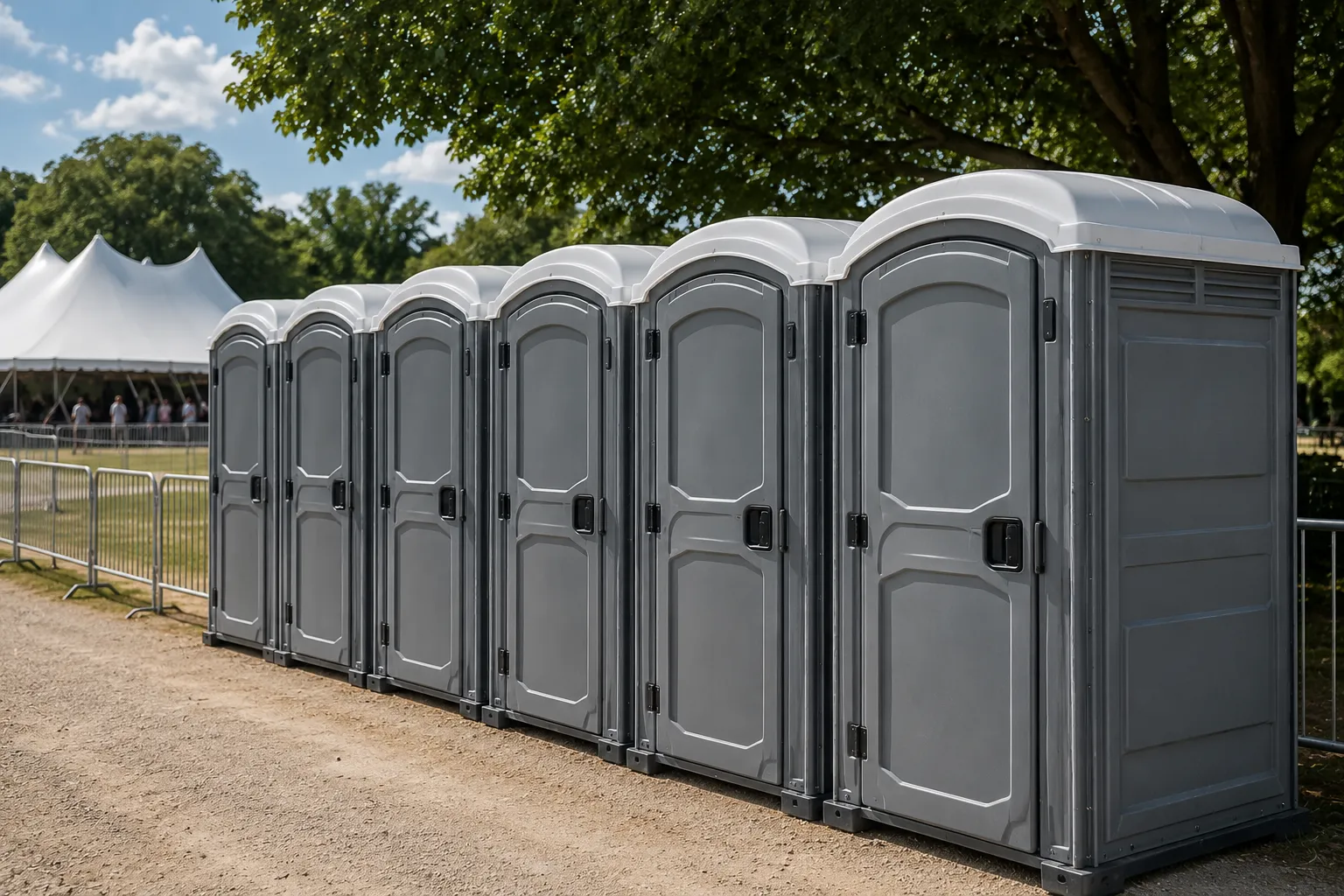
Put them next to the toilets, not across the lot. That is the short answer, and it is also what keeps crews actually using them instead of skipping the walk. ADA Standards section 302.1 requires stable, firm, slip-resistant ground surfaces at accessible facilities, which matters if your site sits on gravel or turf, common around events at venues booked through event restroom rental planning. Section 308.2.1 sets a maximum high reach of 48 inches and a minimum low reach of 15 inches, so mounting height on the station matters if the site expects wheelchair users. Section 309.4 requires operable parts, like a pump handle or spigot, to work with one hand and no more than 5 pounds of force, no twisting or pinching. If you are placing stations near an ADA accessible porta potty cluster, keep the wash station within the same 60-inch turning circle called out in ADA Standards 304.3.1. La Crosse job sites in tight urban lots, especially downtown renovation work, often need to confirm placement in the public right of way with the city before delivery. We have not verified a specific La Crosse ordinance number for this, so check with the city directly rather than assuming a blanket rule. The porta potty placement guide and porta potty permit requirements pages cover the general placement logic while you confirm local specifics.
Does hand sanitizer meet the requirement?
No. Hand sanitizer does not satisfy 29 CFR 1910.141(d)(2), which requires soap and towels or a hand drying device wherever washing facilities are mandated. A hand sanitizer station rental is a fine supplement between wash-ups, and plenty of sites in La Crosse run both, but it cannot replace a real sink when 1926.51(f)(1) applies to paint, coating, herbicide or insecticide work. If your crew is doing general framing or concrete work with no contaminant exposure, sanitizer plus a nearby standard porta potty rental may be all that is required. The distinction matters most on mixed-scope jobs: a renovation crew in French Island, 5.0 miles northwest of La Crosse, might spend the morning framing and the afternoon spraying sealant, which flips the requirement on partway through the day. When in doubt, order the sink. It costs less than a stop-work order.
How much does a handwashing station rental cost in La Crosse?
Pricing depends on unit type, crew size and rental length, and it pairs well with a porta potty rental cost quote if you are budgeting the whole site at once. Ask La Crosse Porta Pros for a line-item quote through request a quote covering both wash stations and toilets together.
Do I need a handwashing station if I already have a porta potty with a sink?
Some deluxe flushable porta potty units include a built-in sink, which can satisfy the requirement without a separate station. Confirm the sink includes soap and towel or drying capability, since a sink alone without those isn't enough under 1910.141(d)(2).
Can I rent a handwashing station for a single weekend event?
Yes. Weekend rentals work for weddings, festivals and one-day builds. Check wedding restroom rental or festival restroom rental for event-specific packages that bundle wash stations with restroom units.
What is the difference between a handwashing station and a hand sanitizer station?
A handwashing station has running water, soap and towels, meeting 1910.141(d)(2). A sanitizer station is gel-only and does not meet that standard. Construction sites doing contaminant work need the former, not the latter.
Do special events near La Crosse need handwashing stations too?
Yes, especially food vendor areas. Events in Holmen, 12.2 miles north of La Crosse, or Brice Prairie, 12.6 miles northwest, often pair wash stations with festival restroom rental or county fair restrooms setups for vendor compliance.
Next step
Get a delivery date
Tell us the address, the dates and the headcount. We size the order and confirm the route.